Best Cross Margin Crypto Exchanges (2026)
Learn how the top cross margin crypto exchanges protect your total account balance while offering high leverage and deep liquidity for professional trades.

Disclosure: Coinperps may earn a commission from partner links, at no extra cost to you. Reviews are based on independent testing, see how we test.
- Cross-margin crypto exchanges are platforms that utilize your entire account balance as a single pool of collateral to support multiple open positions simultaneously.
- The top six exchanges in 2026 are Bybit, Kraken, Binance, OKX, Hyperliquid, and MEXC, each offering trade-offs between leverage, asset variety, and regulatory compliance.
- They offer benefits over isolated margin like the ability for winning positions to naturally offset losses, but have their disadvantages as well, such as total account liquidation risk.

Bybit
Bybit, founded in 2018 and headquartered in Dubai, is the world’s second-largest exchange by volume, serving 60 million users with 1,800+ assets and over $11 billion in daily trading.
Features
Fees
Regulation
Overall
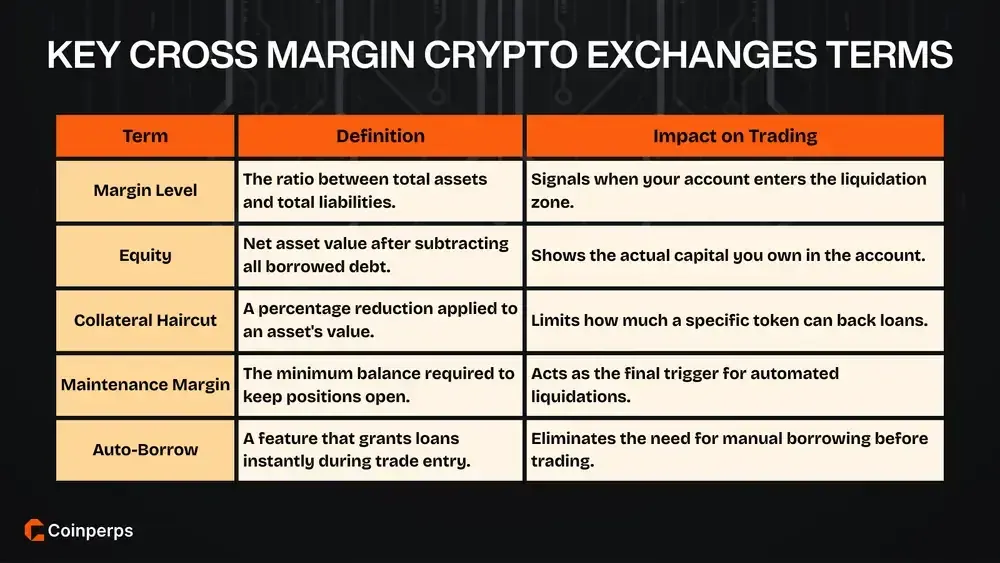
Choosing cross-margin perpetuals allows you to offset losses in one trade with profits from another, preventing forced liquidations on individual positions. You should prioritize platforms with smart collateral haircuts and "auto-borrow" features to avoid manual funding delays during fast-moving market trends.
We suggest looking for exchanges that consolidate your risk across both spot and derivatives into a single liquidity pool. This is critical for maintaining high-volume portfolios without fragmenting your capital. Look for transparent maintenance margin tiers that don't punish you as your position scales.
The table below highlights the critical data for each exchange:
Top Cross Margin Crypto Exchanges in 2026
We analyzed over 20 platforms to select the top cross-margin exchanges for 2026. Our team prioritized high liquidity, diverse collateral options, and technical performance. Each entry on this list passed our strict testing for capital efficiency and immediate order execution.
Our rankings focus on how these exchanges handle complex margin requirements and tiered risk models. We prioritized platforms that allow you to maximize borrowing power while maintaining transparent liquidation rules. This ensures you find the most reliable tools for trading.
1. Bybit
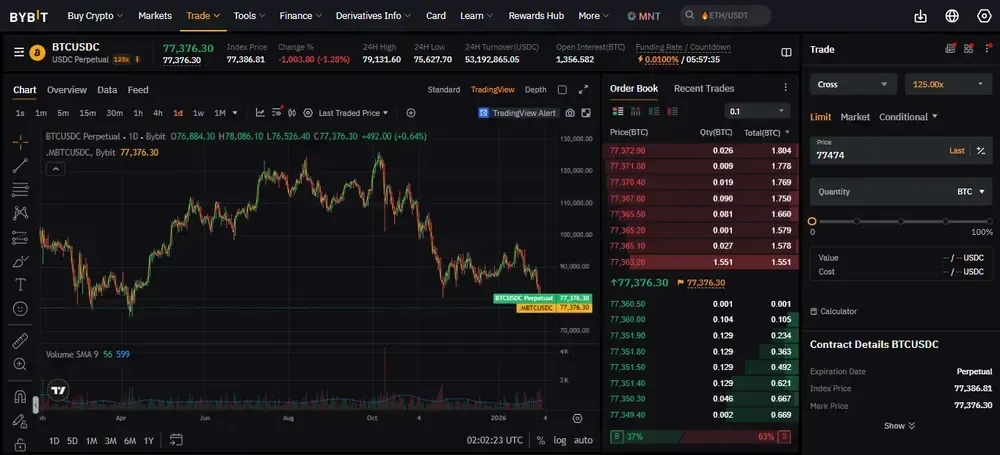
We have thoroughly tested Bybit’s crypto products, and its cross-margin capabilities stand out as the best in 2026. Their system allows you to use a diverse range of over 70 collateral assets, effectively boosting asset utilization across both spot and perpetual markets during volatile swings.
The interface is remarkably smooth, even when you apply 125x leverage on major pairs. We appreciate how unrealized profits from winning trades can immediately support new positions. This feature helps to manage capital without needing constant manual transfers.
While we appreciate the deep liquidity, the 2% liquidation fee on spot margin remains a drawback. Additionally, borrowing rates fluctuate every 1 hour, so we must monitor interest expenses closely to avoid unexpected costs during long-term holding periods.
Pros
- Access high 125x leverage on major cryptocurrency perpetual trading contracts.
- Collateralize over 70 different assets including tokenized gold and BYUSDT.
- Use unrealized trading profits to open additional high-leverage market positions.
Cons
- High 2% liquidation fee applied specifically to spot margin trading activities.
- Borrowing interest rates for margin positions fluctuate on an hourly basis.
- Dynamic risk limits reduce maximum available leverage as position sizes increase.
2. Kraken
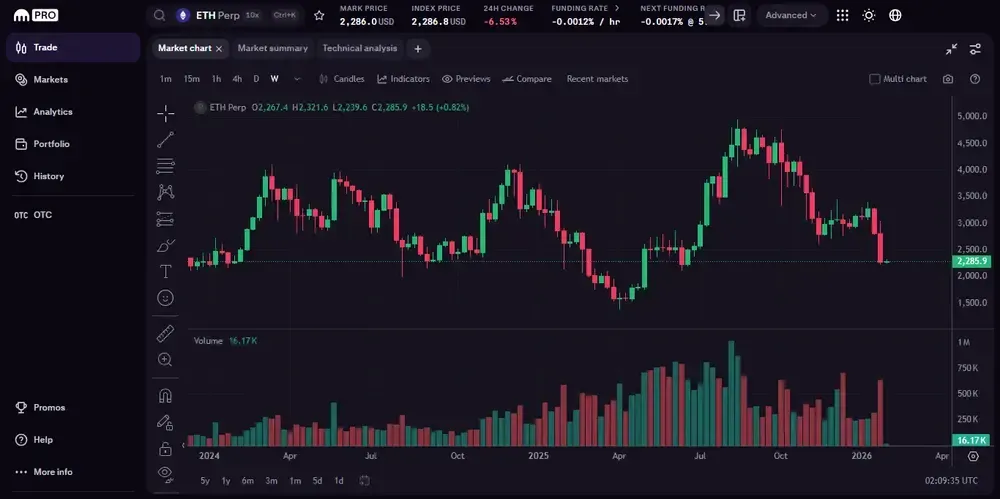
Kraken is the most globally accessible cross-margin regulated crypto platform for cross-margin trades in 2026. Their MiFID II license and FCA registration ensure you can trade crypto assets securely across Europe and the UK, providing a level of reliability that many others lack.
You can manage risk accurately using their Multi-Collateral wallet, which supports over 50 assets. We like how you can back positions with fiat or crypto, allowing for 10x spot leverage or 50x on various crypto futures contracts, higher than local competitors like Crypto.com and Coinbase.
We noticed that rollover fees apply every 4 hours, which demands careful planning for long-term trades. However, their 0.5% liquidation fee is significantly lower than competitors, offering you a safer environment during periods of extreme market price volatility.
Pros
- Access secure cross-margin trading in 190 countries with full regulatory compliance.
- Collateralize over 50 different assets including major fiat and stablecoin pairs.
- Benefit from a competitive 0.5% liquidation fee on your derivatives positions.
Cons
- Rollover interest fees are charged frequently at 4 hour time intervals.
- Maximum leverage is capped at 50x for even the most liquid pairs.
- Specific geographic restrictions apply to retail derivatives access in certain regions.
3. Binance
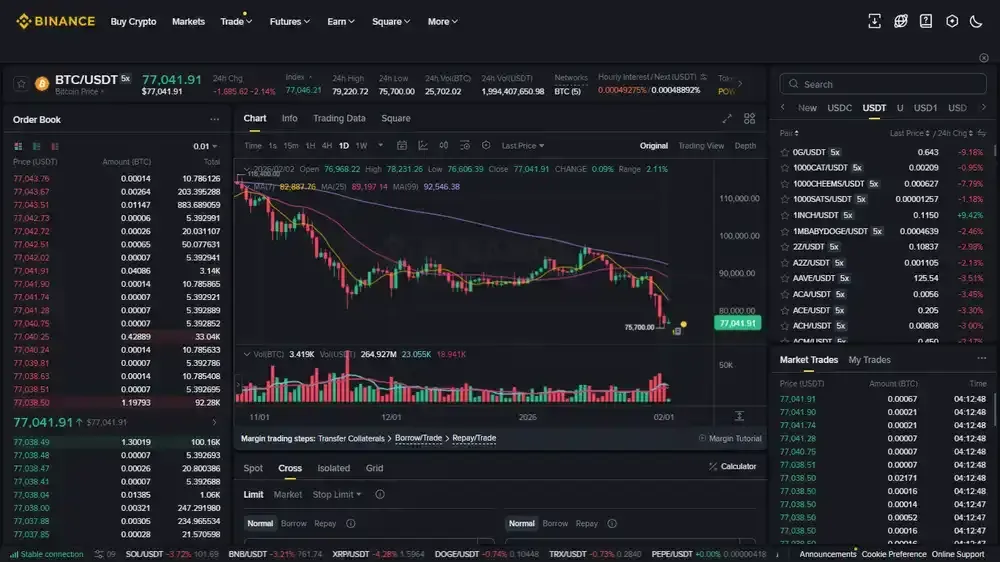
Binance's Cross Margin Pro mode features a tiered risk engine to manage high-leverage positions across its massive asset range in 2026. This system allows you to access up to 20x leverage on smaller debt brackets, though the maximum allowable multiplier automatically scales down as your total liability value increases.
You benefit from an intelligent "Auto-Transfer" feature that seamlessly pulls funds from your spot wallet during order execution. We found the collateral haircuts on 350+ assets particularly fair, ensuring your Bitcoin retains 99.99% value when backing your open trades.
However, we noted that simple interest accrues on an hourly basis, even if your loan is outstanding for only a few minutes. You must also monitor the maintenance margin rates, which jump significantly as your position brackets cross specific thresholds.
Pros
- Access 20x leverage on major assets for accounts with lower liability.
- Choose over 350 collateral assets with tiered haircuts based on market value.
- Automatically repay debts using the Auto-Repay function to streamline your workflow.
Cons
- Interest charges apply for a full hour regardless of the duration.
- High maintenance margin requirements increase sharply as your trading position grows.
- Regional restrictions frequently limit access to specialized Cross Margin Pro tools.
4. OKX
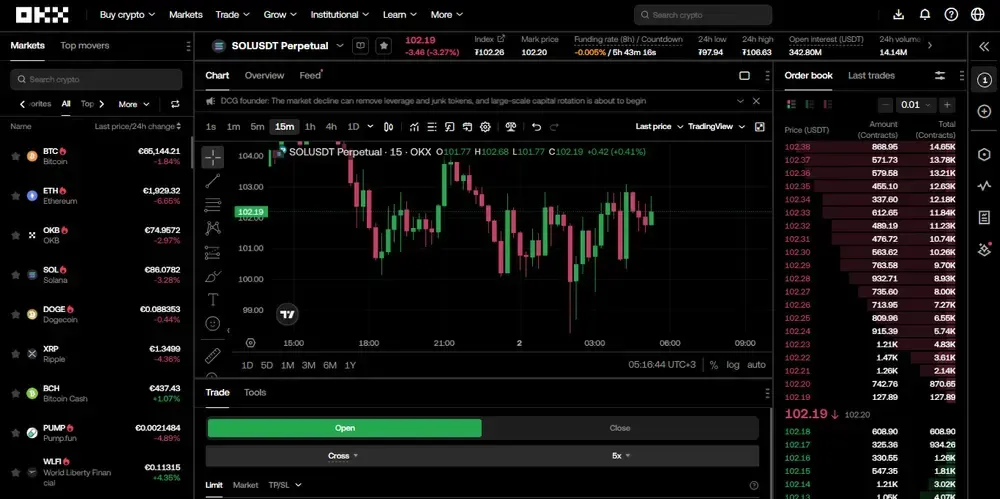
OKX is a powerhouse for multi-asset strategies through its sophisticated cross-margin system. You can pool capital across spot and derivatives effortlessly. You get 10x spot leverage, providing substantial buying power without introducing excessive liquidation risk for portfolios.
Collateral discount rates here are highly competitive compared to other platforms. We noticed that Bitcoin maintains a high 0.98 valuation in the first tier. This ensures your primary holdings work harder, maximizing borrowing capacity across their wide market selection.
Our team appreciates the unique interest rules found on the platform. Interest records on the hour, but if you repay before the next mark, no fees apply. This is perfect for quick scalp trades while avoiding daily carry costs.
Pros
- Apply a 0.98 collateral discount rate for your Bitcoin holdings.
- Benefit from 10x leverage on a wide range of spot pairs.
- Avoid hourly interest charges by repaying your loans before the hour.
Cons
- Maintenance margin requirements increase sharply as your total trading position grows.
- Tiered risk levels can be complex for newer margin traders to navigate.
- Regional restrictions limit access to certain high-leverage and advanced trading features.
5. Hyperliquid
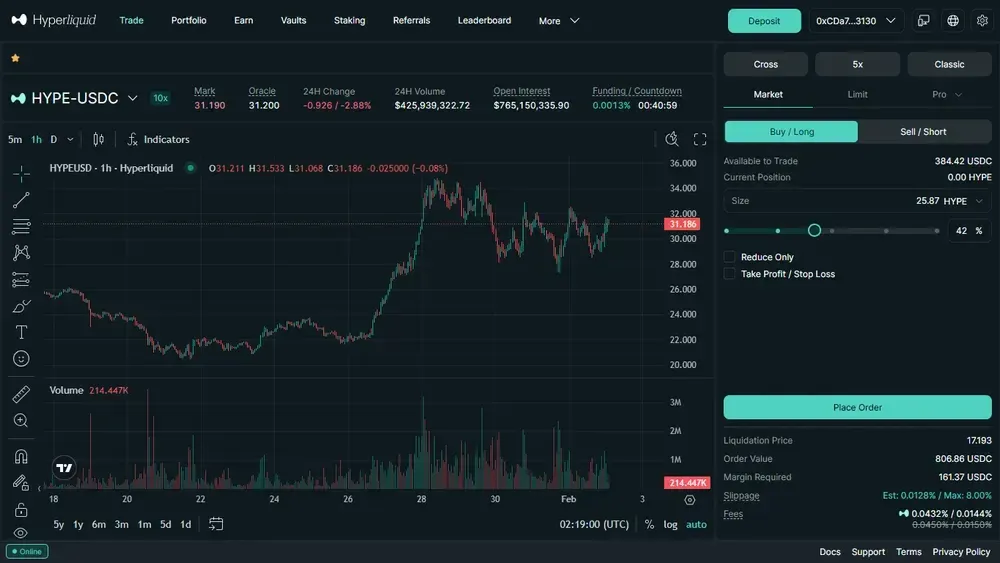
We found Hyperliquid’s native L1 offers a specialized approach to decentralized cross-margin trading by sharing collateral across all open positions. You can access up to 40x leverage on major perpetuals, and notably, leverage is only checked at the time of opening your position.
The fee structure in 2026 features a 0.015% maker and 0.045% taker rate. We appreciate how unrealized profits are instantly available as initial margin for new trades. This allows you to scale up effectively without the delays or gas costs typically associated with on-chain execution.
We noticed that any action to transfer margin requires you to maintain at least 10% of your total notional position value. Maintenance margin is set at exactly half of the initial requirement, making it essential for you to monitor account value including all unrealized PnL closely.
Pros
- Share collateral across all positions for maximal performance.
- Access up to 40x leverage on major decentralized perpetual trading contracts.
- Benefit from low 0.015% maker fees and zero gas on the HyperCore L1.
Cons
- Primary collateral is restricted to USDC within the Hyperliquid decentralized network.
- Margin transfers require maintaining a 10% minimum of your total notional value.
- Self-custody of private keys is required for all your decentralized account activities.
6. MEXC
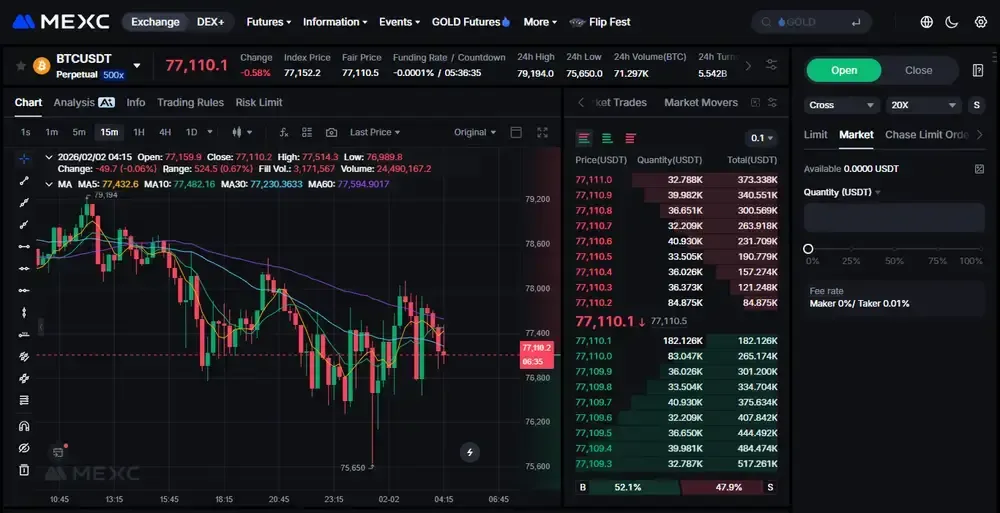
We recommend MEXC for its industry-leading 500x leverage on major USDT-margined perpetual pairs like Bitcoin. This capability is ideal for high-precision, aggressive scalping. You benefit from a 0% maker fee on all spot pairs, significantly reducing your total trading overhead in 2026.
The platform provides access to a massive selection of over 3,200 assets, offering you the most flexibility when selecting cross-margin collateral. We tested the system and found it handles rapid fluctuations well, allowing you to manage diverse risk profiles from a single account.
On the downside, we noticed that while fees are competitive, taker fees on futures can reach 0.03% or higher depending on market conditions. Lower regulatory oversight means you must prioritize your personal security. We found customer support response times can sometimes lag behind regulated peers.
Pros
- Access unmatched 500x leverage on major cryptocurrency cross-margin perpetual contracts.
- Trade all spot pairs with 0% maker fees for maximum profit retention.
- Collateralize a massive range of over 3,200 digital assets within one account.
Cons
- Taker fees on futures can reach 0.03% depending on your trading tier.
- Lower regulatory oversight requires you to be proactive with all fund security.
- Customer support response times are slower than top-tier regulated global exchanges.
What are Cross Margin Crypto Exchanges?
Cross margin perpetual crypto exchanges are trading platforms that use a single, consolidated pool of collateral to back every open trade in your account. This model ensures that your total wallet balance acts as a universal safety net for all positions.
The architecture of these accounts treats your entire portfolio as one unified risk profile rather than a collection of separate bets. Your surplus equity from a winning trade automatically supports a losing one, which prevents unnecessary liquidations during choppy market conditions.
In contrast to isolated margin platforms that restrict funds to specific trading pairs, these exchanges allow for a more flexible use of assets. Your holdings remain fluid, absorbing the volatility of the market without requiring you to micromanage individual trade balances.
Expert traders rely on these systems because they provide a streamlined way to hedge multiple pairs simultaneously. You can maintain diverse market exposure while relying on the strength of your total account balance to stay in the game longer.
How to Choose a Cross Margin Crypto Exchange
Selecting the right platform requires a careful look at liquidity, asset support, and fee structures. You must ensure the exchange aligns with your specific risk tolerance while providing the technical tools necessary for managing complex, multi-asset portfolios.
Step 1: Evaluate Liquidity and Depth
Deep order books are essential to avoid slippage when you enter or exit large cross-margin positions during periods of high market stress.
Examine the spread and depth for your favorite pairs:
- Slippage Protection: Large cross-margin trades require tight spreads to avoid triggering accidental liquidations during periods of high market volatility.
- Order Book Depth: High liquidity ensures your entire collateral pool remains stable even when you execute massive market orders in 2026.
- Market Resilience: Reliable exchanges maintain consistent volume across both spot and perpetual markets to support your sophisticated hedging strategies safely.
Step 2: Check Collateral Haircuts
Different assets provide varying levels of support for your trades based on their volatility and the specific exchange’s internal risk management protocols.
Review the tier tables for all collateral assets:
- Tiered Valuation: Exchanges apply different discount rates based on your total holdings to prevent single-asset concentration risks within your account.
- Dynamic Adjustments: Modern platforms update their collateral ratios in real-time to reflect the actual market risk and liquidity of altcoins.
- Asset Diversity: Choosing a provider with broad collateral support allows you to back your trades with a wider variety of holdings.
Step 3: Inspect Fee Schedules
High-frequency traders must account for how interest rates and trading fees impact the overall profitability of your long-term cross-margin holdings and scalps.
Look for hidden costs in the funding rates:
- Interest Accrual: Most cross-margin systems charge interest on an hourly basis, which can quickly erode your profits if left unmonitored.
- Funding Rates: Traders must balance the cost of perpetual funding rates against the potential gains of holding high-leverage positions over several days.
- Maker Rebates: Efficient fee structures often provide significant discounts for limit orders that add liquidity to the exchange's global order books.
Step 4: Verify Security Features
Protecting your total account balance is paramount since cross-margin systems expose your entire wallet to the market's inherent risks and daily volatility.
Check for two-factor authentication and cold storage:
- Cold Storage: Reputable platforms keep the majority of user collateral in offline wallets to protect against potential hacks and systemic breaches.
- Insurance Funds: Leading exchanges maintain dedicated reserves to cover catastrophic liquidation gaps and ensure the overall stability of the trading system.
- Withdrawal Safeguards: Advanced security protocols like whitelisting and time-locks prevent unauthorized access to your shared collateral pool during 2026.
Pros and Cons of Cross Margin Crypto Exchanges
Utilizing a shared collateral pool offers a sophisticated way to manage multiple exposures while lowering the risk of individual liquidations. However, this unified approach also introduces systemic risks that can affect your entire wallet balance. Examine the advantages and disadvantages in the table below:
Bottom Line
Cross-margin trading is a powerful choice for those managing complex, multi-asset portfolios. You benefit from a unified safety net that uses every dollar to keep your active positions open.
Success depends on monitoring your total account health rather than individual trades. You must maintain strict discipline to avoid over-leveraging and losing your entire wallet during market spikes.
Choosing the right exchange requires balancing high leverage limits with strong security. Focus on platforms that offer transparent fee structures and deep liquidity for your specific trading strategy.