How to Use Hyperliquid in the USA
Discover how to use Hyperliquid in the USA by following our step by step guide to learn about VPNs, bridging funds, and managing risks for crypto trading.

Disclosure: Coinperps may earn a commission from partner links, at no extra cost to you. Reviews are based on independent testing, see how we test.
- Crypto traders residing in the United States currently face strict geographic blocks that prevent them from accessing Hyperliquid directly through standard internet connections.
- However they can easily bypass these digital barriers by using a high quality virtual private network and connecting through a server in a supported region.
- You should consider the benefits and drawbacks of this approach because using workarounds involves technical risks and potential regulatory issues.

Hyperliquid
Hyperliquid is the largest and most liquid decentralized perpetuals exchange, processing over $2 trillion in volume on a custom Layer-1 with sub-second finality.
Features
Fees
Regulation
Overall
If you’re in the United States and keep hearing that Hyperliquid is a top onchain perp exchange, you’re probably wondering whether you can access it and place trades without getting blocked.
Many traders feel frustrated by geographic restrictions that limit their ability to use advanced decentralized finance tools. This guide explains how to get around these blocks safely so you can start trading your favorite perpetuals with ease, while also taking into account the potential pitfalls.
Discover the exact steps for accessing Hyperliquid from the USA. ⬇️
Can I Use Hyperliquid in the USA?
No, you cannot officially access Hyperliquid from within the United States due to strict geographic blocking. The platform identifies American IP addresses and prevents them from interacting with its decentralized exchange to ensure regulatory compliance and avoid legal issues.
While the platform is decentralized, the core developers implement front-end restrictions for US residents. This means that users often seek alternative methods like virtual private networks or remote servers to bypass the digital wall protecting the protocol from prohibited regions.
That said, Hyperliquid is onchain software, and smart contracts may remain viewable from anywhere even when the website is geofenced. The practical risk is that accounts can be flagged, access revoked, or funds delayed if you violate the terms.
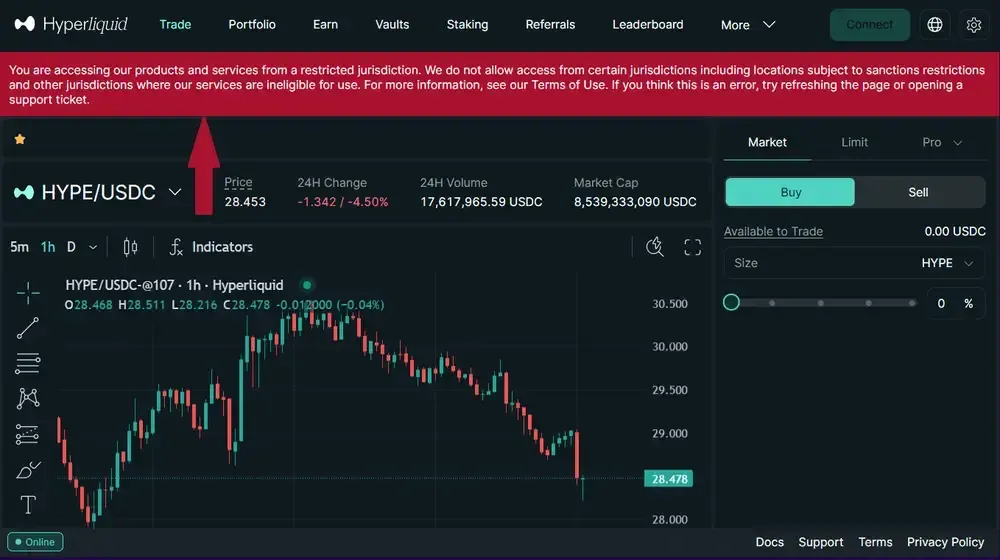
Why is Hyperliquid Restricted in the United States?
The United States is among the 15+ jurisdictions in Hyperliquid's restricted country list because of complex legal frameworks. Regulatory bodies like the CFTC and SEC demand specific registrations for any platform offering perpetual futures or leveraged derivative products.
Since Hyperliquid provides high leverage without requiring KYC, it conflicts with strict American anti-money laundering and investor protection laws. To avoid potential legal action and massive fines, the team proactively blocks traffic originating from American digital borders.
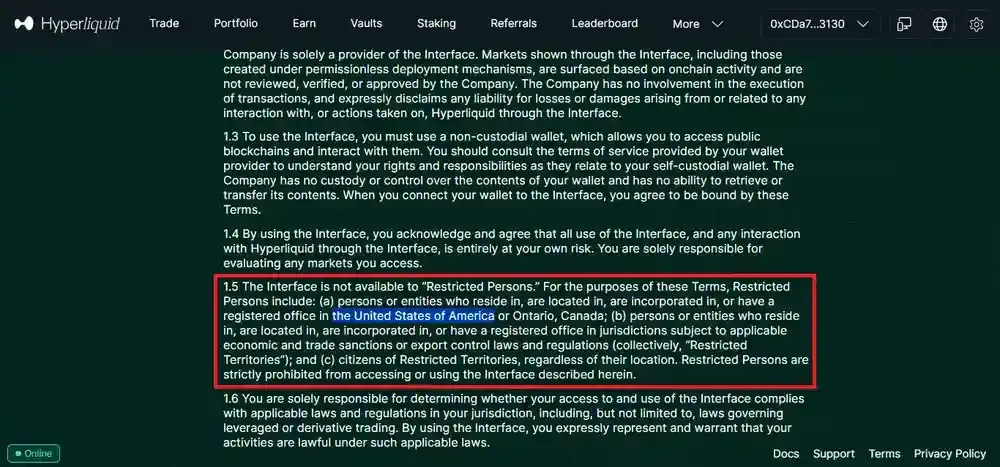
How to Use Hyperliquid in the USA
Because Hyperliquid restricts US persons, “using it in the USA” mainly means confirming you’re eligible, accessing only where permitted, and managing funds and risk responsibly.
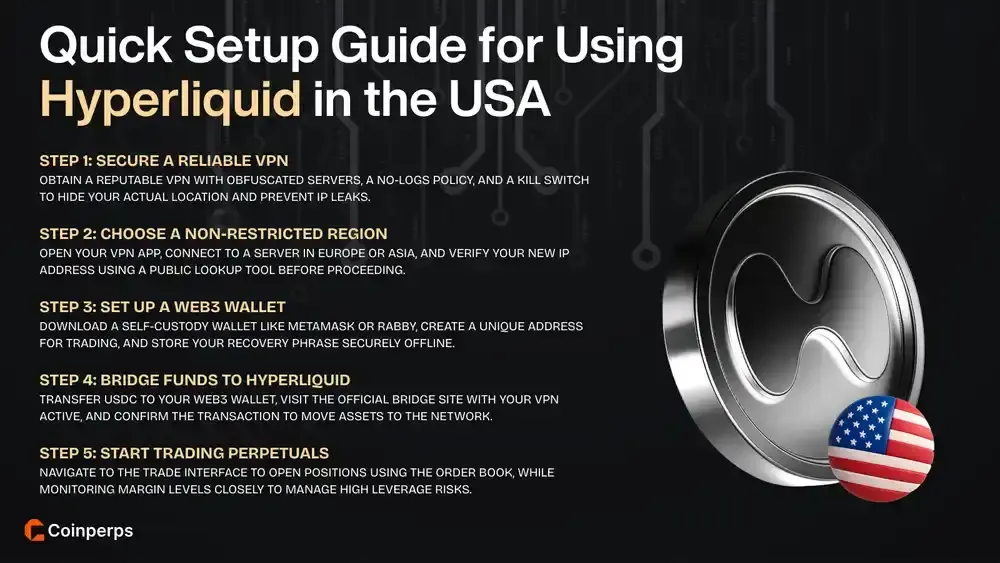
Step 1: Secure a Reliable VPN
The first step to accessing Hyperliquid from the USA involves obtaining a reputable Virtual Private Network (VPN) that offers obfuscated servers and high-speed connections. This tool masks your actual location by routing internet traffic through a server in a region where the platform operates freely.
Ensure your chosen provider has a strict no-logs policy and a kill switch feature to prevent accidental IP leaks. Without these protections, your connection might drop, exposing your US location and potentially leading to a frozen account.
Step 2: Choose a Non-Restricted Region
Follow these specific steps to select the correct server location:
- Open your VPN application on your chosen device.
- Connect to a server located in Europe or Asia.
- Verify your new IP address through a public lookup tool.
Step 3: Set Up a Web3 Wallet
Download a browser extension wallet like MetaMask or Rabby to interact with Hyperliquid. You need a self-custody wallet because centralized exchanges will not allow you to connect directly to the underlying Hyperliquid L1 blockchain infrastructure and trade.
Create a new wallet address specifically for this activity to keep your primary funds separate. Always store your recovery phrase offline in a physical location to ensure you never lose access to your decentralized trading capital or rewards.
Step 4: Bridge Funds to Hyperliquid
Complete the bridging process by following these three essential actions:
- Send USDC from your primary exchange to your Web3 wallet.
- Visit the official bridge site while your VPN is active.
- Confirm the transaction to move assets to the Hyperliquid network.
Step 5: Start Trading Perpetuals
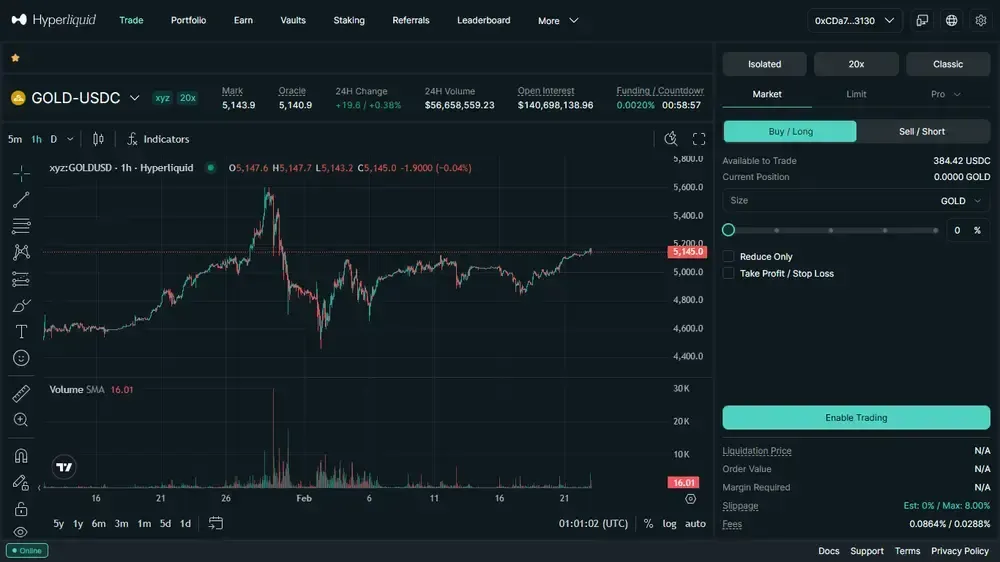
Navigate to Hyperliquid's trade interface once your funds arrive on the native chain. You can open long or short positions on various crypto assets using the order book, which offers deep liquidity and very low execution fees.
Monitor your margin levels closely to avoid liquidation during periods of high market volatility. The platform allows for high leverage, which can amplify your gains but also increases the risk of losing your entire initial deposit very quickly.
Is it Safe to Use Hyperliquid in the USA?
Using a VPN to access restricted platforms like Hyperliquid carries inherent risks. While the protocol itself is secure, your access depends entirely on your digital tools.
You face potential account restrictions if the platform detects your true location. Always prioritize security measures to protect your capital from sudden platform bans.
Potential Risks
Even with non-custodial wallets, perp trading concentrates risk in smart contracts, oracle design, and platform controls, especially when geofencing and enforcement are involved.
Key risks US traders should understand before trading:
- Geofence breach: If you’re a restricted person, access can be blocked later, creating delays and uncertainty when managing positions.
- Account flagging: IP patterns or wallet heuristics may trigger reviews, limiting interface features or support responsiveness during volatility.
- Smart-contract bugs: Audits help, but exploits still happen, and losses may be unrecoverable without traditional chargebacks or insurance.
- Oracle or pricing issues: Sudden index dislocations can trigger liquidations, especially at high leverage or during thin liquidity windows.
- Protocol governance risk: Emergency parameter changes or listings decisions can alter margin requirements, funding, or tradeability with little notice.
- Operational outages: Front-end downtime, RPC rate limits, or API disruptions can prevent order updates exactly when markets move fastest.
- Legal and tax ambiguity: Derivatives classification, reporting duties, and state-by-state rules can create compliance risk for US participants.
Pros and Cons of Trading on Hyperliquid
Evaluating the advantages and disadvantages of trading perps on Hyperliquid from the USA helps you decide if the potential rewards justify the technical hurdles required for American access.
About Hyperliquid
Hyperliquid is a high-performance blockchain and decentralized perpetuals exchange, striving for an “open financial system” where liquidity and apps share one unified platform. Traders typically connect a self-custody wallet and trade over 100+ markets with up to 40x leverage using USDC as margin.
The interface feels like a centralized exchange, but settlement and risk live onchain, with optional APIs for power users. Hyperliquid doesn’t require traditional KYC, yet it uses geofencing and contractual restrictions to block certain jurisdictions, including the United States.
Bottom Line
For most US residents and citizens, Hyperliquid is effectively off-limits due to geoblocking and terms restricting US persons, and carries avoidable legal risk.
Accessing Hyperliquid from the United States is possible but requires a VPN and technical knowledge to navigate regional restrictions and maintain privacy.
You must weigh the benefits of high leverage against the risk of potential account bans or loss of funds due to strict regulations.