Perpetual DEX Aggregators Explained (Top Platforms)
Compare the top perpetual DEX aggregator platforms like Jupiter and MUX to discover which crypto protocol offers the highest leverage and deepest liquidity.

Coinperps may earn a commission from partner links, at no cost to you; rankings follow our methodology. Not financial advice.
Key takeaways
- A perpetual DEX aggregator is a crypto protocol that unifies fragmented liquidity from multiple decentralized exchanges into a streamlined and easy-to-use trading interface.
- The top platforms for 2026 are Jupiter, Defi App, Vooi, dHEDGE, and MUX Protocol, which lead the market in volume and routing efficiency.
- An alternative way to trade is manually swapping collateral on spot DEX aggregators like 1inch before opening a positions directly on perps like Hyperliquid or Lighter.
On this page 6 sections
If you are searching for the best perp DEX aggregator in 2026, you likely want to eliminate the friction of liquidity fragmentation and high slippage. These protocols unify multiple exchanges into a single dashboard to ensure optimal trade execution.
Finding a reliable platform requires looking at specific metrics like supported networks, fee structures, and maximum leverage limits. Our 2026 methodology focuses on platforms that prioritize deep liquidity while offering a highly professional and streamlined user experience.
Compare the top five perpetual aggregator options below:
Exchange | Chains | Trade fee | 30-day volume | Max leverage | Key nuance |
|---|---|---|---|---|---|
Solana | 0.06% | $32 billion | 250x | Zero price impact via the JLP pool model | |
EVM, SOL | 0.03% | $3 billion | 40x | Gasless trading with automated wallet abstraction | |
Omnichain | Variable | $1.5 billion | 100x | Aggregates 200+ markets including stock perps | |
Polygon, L2 | Variable | $7.02 million | Varies | Trust-minimized social copy trading vaults | |
Arb, Base | 0.06% | $34 million | 100x | Automated leverage boosting and margin supply |
Top Perpetual DEX Aggregators in 2026
The best perp DEX aggregator options for 2026 are those that effectively solve liquidity fragmentation for professional on-chain traders. We prioritize platforms that offer deep liquidity, competitive fee structures, and flawless cross-chain execution to ensure you get the best price.
Our selection process for the top perp DEX aggregator list involves analyzing monthly trading volume, asset diversity, and routing efficiency. We specifically vetted tools providing advanced leverage options while maintaining non-custodial security standards and a highly streamlined user experience.
1. Jupiter
 Best forZero price impact via the JLP pool model
- Chains
- Solana
- Trade fee
- 0.06%
- 30-day volume
- $32 billion
- Max leverage
- 250x
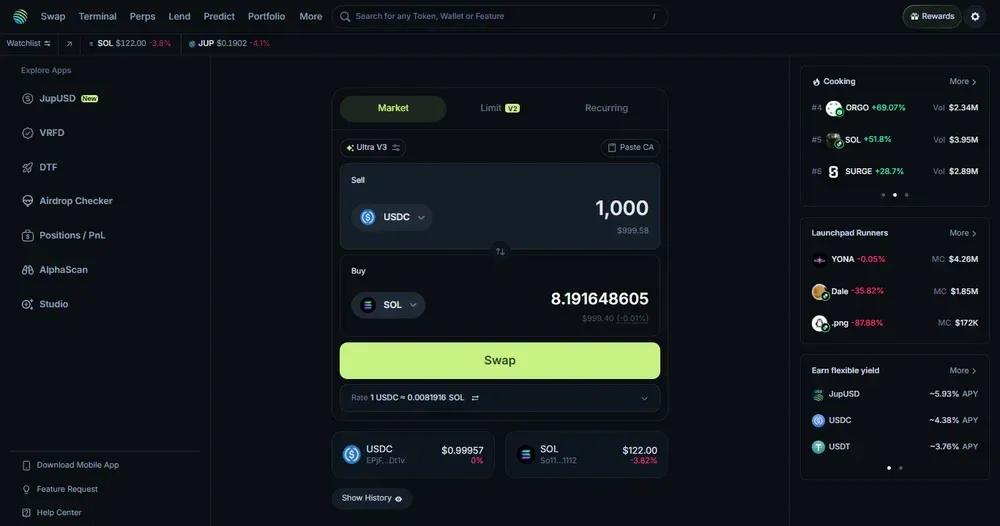
Jupiter is our top recommendation for anyone looking for a perpetual DEX aggregator on Solana because it handles the heavy lifting of liquidity sourcing automatically. If you want to trade with size, the terminal pulls from every available pool and it effectively removes the need to manually check different DEX prices.
You will notice the platform separates bridging, asset aggregation, and perpetuals into 3 different tools to keep the workspace organized. This means you aren't fighting a cluttered UI when trying to manage a high-leverage position. You can swap between these functions in one click without losing your trade data or chart setup.
To trade perps, you interact with the JLP pool which acts as your direct counterparty for every position. This setup provides the depth needed to execute trades without the high slippage usually found on smaller chains. It is the most reliable way to access high leverage within the Solana ecosystem today.
Pros
- Open positions with max leverage up to 250x on major assets.
- Interface splits bridging, aggregation, and perps into 3 different tools.
- Deep liquidity from JLP pool ensures fast execution for large orders.
Cons
- Trading is restricted to only Bitcoin, Ethereum, and Solana markets.
- No support for other chains as it only works on Solana.
- Fees cost 0.06% for both opening and closing your trade.
2. Defi App
 Best forGasless trading with automated wallet abstraction
- Chains
- EVM, SOL
- Trade fee
- 0.03%
- 30-day volume
- $3 billion
- Max leverage
- 40x
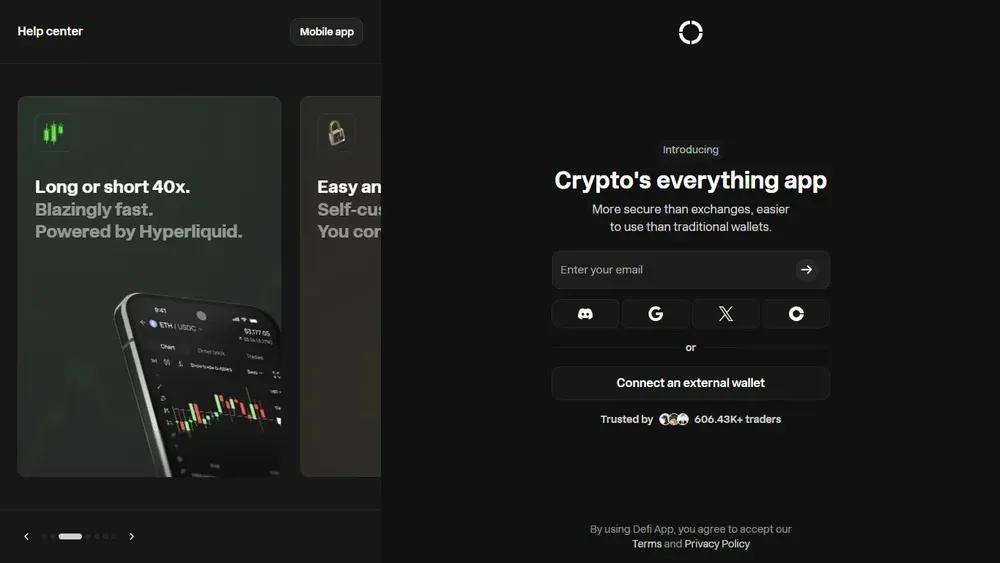
Defi App is the go-to for perps traders moving away from centralized exchanges because it completely removes the headache of wallet management. When you sign up via email or social account (X), the platform automatically creates both EVM and Solana wallets for you.
If you hate managing gas tokens across 5 different chains, this protocol eliminates it by sponsoring your transactions entirely. You can swap assets across ecosystems or open perps without holding the native gas token of the underlying chain for gas.
The platform is a powerhouse for volume, processing $3 billion in monthly perpetual trades according to DefiLlama data. If you want exposure to traditional markets, you can trade HIP-3 perpetuals for US stocks like NVDA or TSLA directly through them.
Pros
- Skips manual setup by creating EVM and Solana wallets automatically.
- Operates with gasless transactions so you never need native gas tokens.
- Handles $3 billion in monthly volume for deep, reliable execution.
Cons
- Trading access is blocked for any users located in the US.
- Perpetuals engine is built exclusively on top of the Hyperliquid network.
- Max leverage is capped at 40x depending on the specific asset.
3. Vooi
 Best forAggregates 200+ markets including stock perps
- Chains
- Omnichain
- Trade fee
- Variable
- 30-day volume
- $1.5 billion
- Max leverage
- 100x
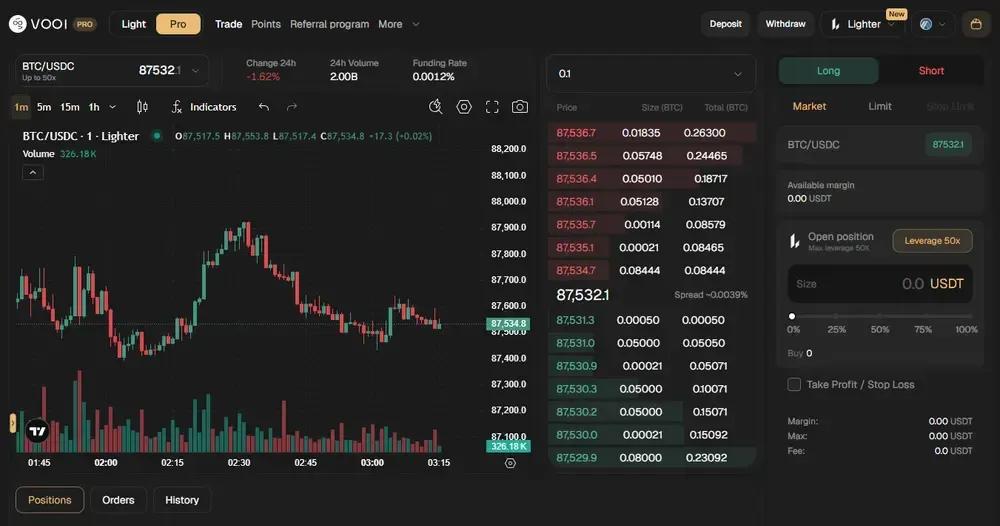
Third on our list of top perpetual DEX aggregators we have Vooi, which unifies fragmented liquidity across multiple chains. It allows you to access platforms like GMX, Gains, Aster, Orderly, and Hyperliquid from one interface to find the best entry prices.
The protocol splits its offering into Light and Pro apps to cater to different trading styles. If you use Vooi Light, you get chain abstraction that handles gas and bridging, while Pro focuses on high-performance order book execution.
Traders use this perp DEX aggregator to optimize funding rates and execution costs across 8 different protocols. If a certain DEX has high slippage, the routing engine identifies better depth elsewhere to protect your capital from unnecessary trade losses.
Pros
- Access liquidity from 8 major perpetual protocols through a single interface.
- Chain abstraction in Vooi Light handles gas and cross-chain bridging.
- Smart routing optimizes funding rates to improve long-term position profitability.
Cons
- Extra fees of $0.20 plus 0.1% collateral apply on some trades.
- Different fee models across integrated DEXs create complex cost structures.
- Users must navigate between Light and Pro apps for specific features.
4. dHEDGE
 Best forTrust-minimized social copy trading vaults
- Chains
- Polygon, L2
- Trade fee
- Variable
- 30-day volume
- $7.02 million
- Max leverage
- Varies
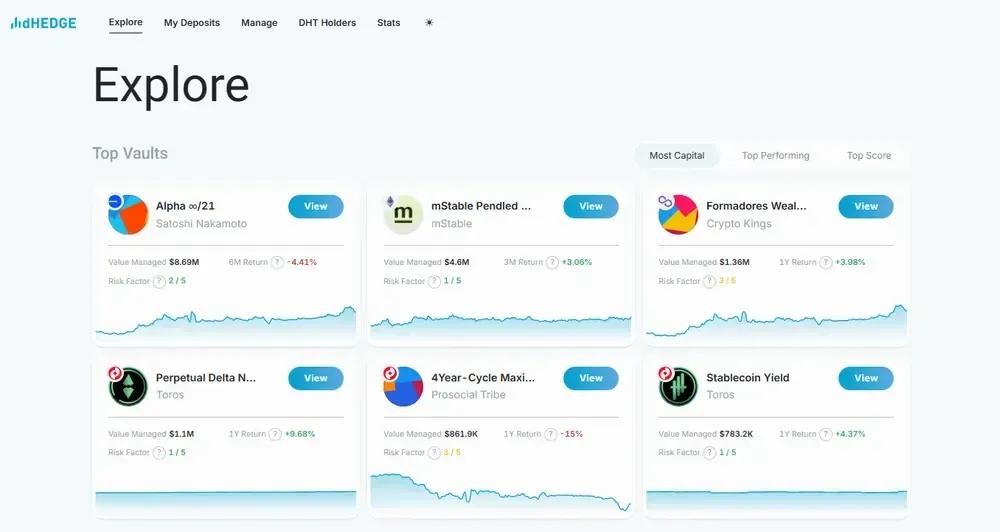
The next protocol we recommend for automated trading is dHEDGE, which functions as a vault-based perp DEX aggregator. It processes $7.02 million in monthly volume by allowing users to follow professional managers across multiple Layer 2 networks.
If you want to copy successful strategies, you simply deposit assets into trust-minimized vaults to receive ERC-20 tokens. These tokens track real-time performance, ensuring you maintain custody while the manager handles the complex routing and execution details.
The protocol is rebranding to Chamber to introduce "DeFi Perps" through a new lending market. This allows you to leverage any yield-bearing asset into a perpetual contract, effectively expanding the tradable market beyond standard crypto pairs for traders.
Pros
- Follow expert traders by depositing into trust-minimized vault strategies.
- Maintain full custody with transferable ERC-20 tokens for every vault.
- DeFi Perps feature allows for leverage on any tokenized asset.
Cons
- Monthly perp volume is low at only $7.02 million currently.
- All vault token redemptions are subject to a 24-hour lockup.
- Available assets are limited to specific whitelisted protocols and tokens.
5. MUX Protocol
 Best forAutomated leverage boosting and margin supply
- Chains
- Arb, Base
- Trade fee
- 0.06%
- 30-day volume
- $34 million
- Max leverage
- 100x
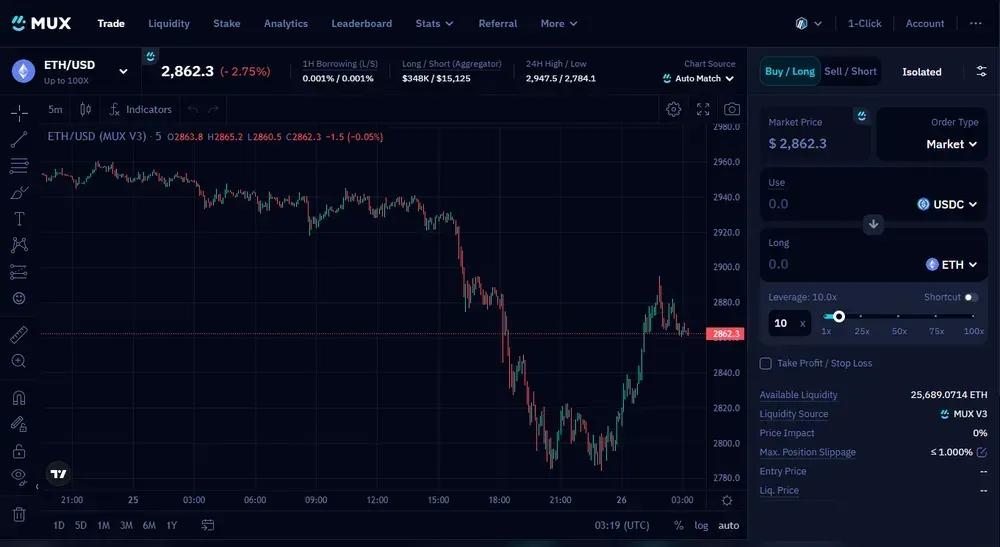
Final on our list of recommendations is MUX Protocol, the first widely adopted perp DEX aggregator to unify scattered liquidity across several networks. It streamlines your trading experience by automatically selecting the most cost-effective route for every position.
The protocol uses a specialized smart position routing engine to split large orders across integrated sources like GMX and Gains Network. This allows you to trade with deep aggregated liquidity and 0% price impact on major assets like Bitcoin.
If you need more power, MUX supplies additional collateral to your positions to boost leverage up to 100x on underlying protocols. This leverage boosting feature optimizes your liquidation price, giving you more breathing room during volatile market swings.
Pros
- Smart routing engine automatically selects the lowest composite trading costs.
- Supplies extra margin to boost leverage up to 100x safely.
- Offers 0% spread and zero price impact for large trades.
Cons
- Users pay additional leverage boost fees for high-leverage aggregated positions.
- Trading cost structures vary depending on which underlying protocol is used.
- Borrowing fees are collected hourly and can scale with pool utilization.
What is a Perpetual DEX Aggregator?
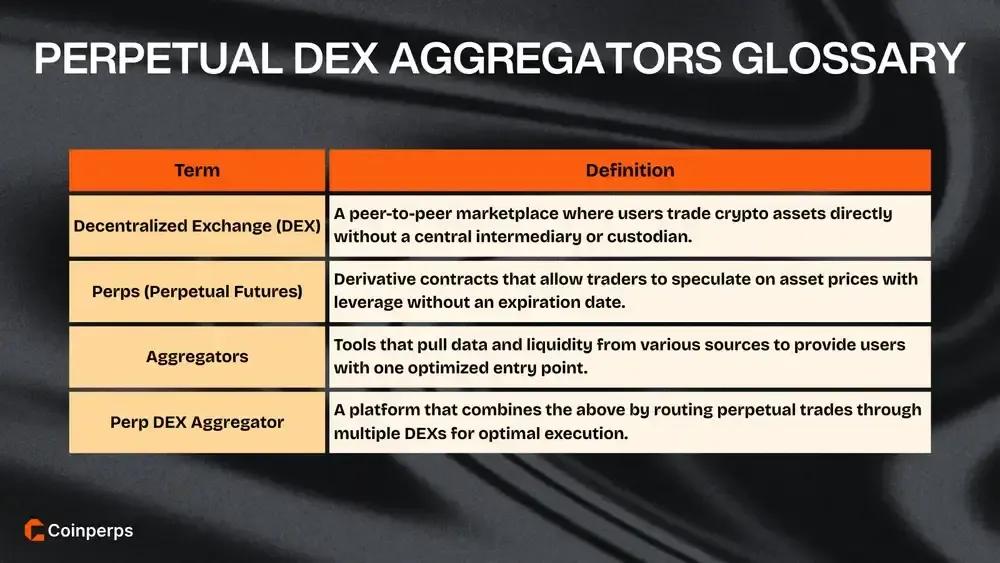
A perpetual DEX aggregator is a specialized financial layer that connects multiple decentralized exchanges into a unified trading interface. It allows you to access deep liquidity from various sources without needing to manage separate accounts or different wallets.
This technology works by scanning the entire market to find the most efficient route for your leveraged trades. When you open a position, the perp DEX aggregator compares funding rates and slippage across platforms to minimize your costs.
Trading through these platforms eliminates the manual effort of jumping between different protocols to find the best price. By consolidating fragmented liquidity, a perp DEX aggregator ensures that large orders execute smoothly without causing massive price impact or slippage.
Pros and Cons of Using Perpetual DEX Aggregators
Using a perp DEX aggregator provides advantages for execution but introduces specific complexities that every on-chain trader must weigh before opening new positions.
Best Alternatives to Perpetual DEX Aggregators
If you aren't ready to use a perp DEX aggregator, you can still access deep liquidity by manually combining spot aggregation tools with a direct decentralized leverage platform.
Step 1: Secure Collateral via Spot Aggregators
Choosing the right perp DEX aggregator alternative starts with sourcing your initial collateral at the most efficient market price available on your preferred chain.
Use high-volume spot tools to swap into stablecoins.
- 1inch: This platform scans hundreds of liquidity sources across multiple chains to find the absolute lowest swap rates for your collateral.
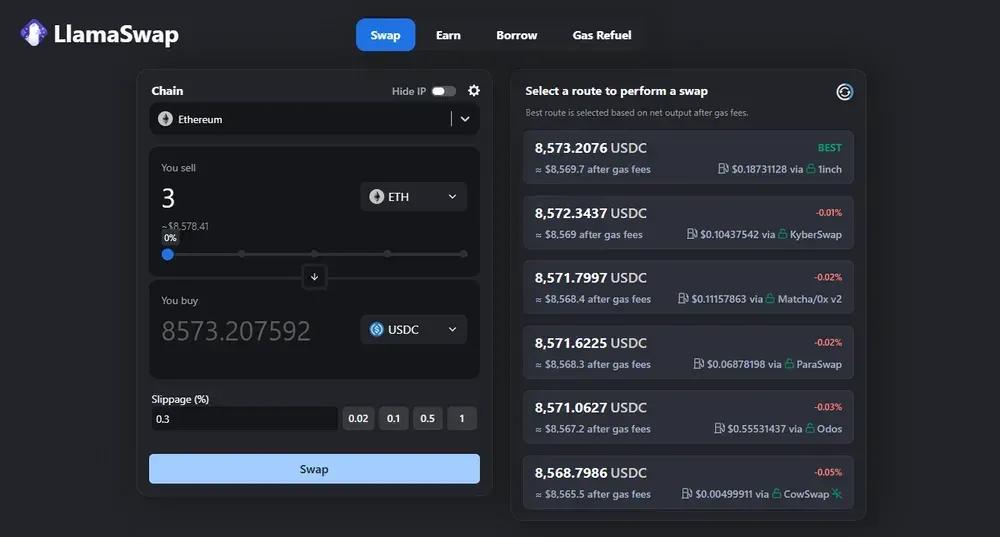
- LlamaSwap: A meta-aggregator that compares quotes from other aggregators to ensure you never pay hidden fees when prepping for a trade.
- Jupiter: The primary choice for Solana users looking to swap into USDC before moving into a high-leverage perpetual position on the network.
- Rango: This tool simplifies cross-chain movements, allowing you to bridge and swap assets in a single transaction before starting your perpetual trade.
Step 2: Trade Directly on Leading Perpetual DEXs
Once you have your collateral, you can skip the perp DEX aggregator layer by interacting directly with the underlying high-performance trading protocols themselves.
Select a protocol based on execution speed and leverage.
- Hyperliquid: This custom Layer 1 perpetual exchange offers 0 gas fees and sub-second finality, making it the premier choice for professional order book trading.
- Jupiter Perps: Use their native perpetual platform for a one-click experience if you prefer trading specifically within the deep Solana liquidity ecosystem.
- Aster: Traders seeking extreme risk management on BNB Chain or Arbitrum often use this platform because it provides up to 1001x leverage options alongside unique multi-chain support features.
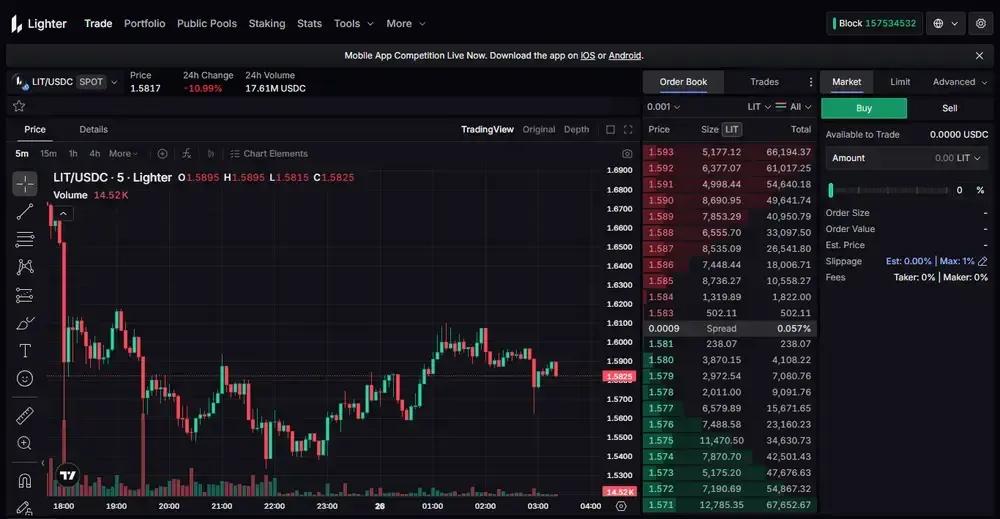
- Lighter: This protocol is built for high-frequency execution on EVM chains, offering verifiable fairness and MEV resistance for users who prioritize transparent order matching.
Bottom Line
Choosing a perp DEX aggregator is the most efficient way to maximize capital utilization while minimizing the technical friction of decentralized trading.
These platforms provide the depth and routing tools necessary to manage large positions across fragmented networks without sacrificing your own self-custody.
As the market grows in 2026, using an aggregator will become the standard for any trader seeking optimal funding rates and execution.
FAQs
How do perp DEX aggregators handle liquidations across different platforms?
A perp DEX aggregator manages liquidations by monitoring your maintenance margin against the specific rules of the underlying protocol. If your collateral drops too low, the aggregator’s smart contracts or keeper bots trigger a force-close on the original DEX.
Are there additional risks when using an aggregator versus a direct DEX?
Using a perp DEX aggregator adds an extra layer of smart contract risk because you are interacting with more code. While it optimizes pricing, any bug in the aggregator’s routing logic or collateral management could potentially expose your funds to exploits.
Do perp DEX aggregators support cross-chain trading without manual bridging?
Many modern perp DEX aggregator platforms now feature chain abstraction to handle bridging automatically in the backend. This allows you to open a position on Arbitrum using funds from Solana without manually moving assets through a third-party bridge first.
Will using an aggregator result in higher fees for my trades?
Most perp DEX aggregator tools charge a nominal service fee, often around 0.015% or a flat $0.20, to cover routing and leverage boosting. However, these costs are often offset by the platform finding lower funding rates and better execution prices for you.


